



How much stock do you need to be confident you won’t run out of a component? What if there’s a sudden run on one of your products – or an interruption in supply? How do you balance the potential cost of lost business against the cost of additional stored inventory?
The nature of business nowadays seems to revolve around instant gratification, or as near to it as is possible. That means that unless you have the monopoly on a particular product, if you can’t supply it customers will likely go elsewhere rather than wait until you can.
When business patterns are standard you’re on pretty safe ground when it comes to stock levels – the expected deliveries come in from suppliers and the expected number of orders come in from customers. (The same applies to deliveries and production line demands – you’re just dealing with internal rather than external customers.)
However, when those patterns change, you are at risk. Some changes can be planned – for example, you can expect a marketing campaign to result in higher demand and so can prepare for it. Others are out of your control. Things that constitute unplanned or unexpected changes can include a surge in customer demand in response to an external trigger, the loss of goods in transit due to accident or theft, or a delay in delivery due to import issues. We’ve seen some combination of the first and last items on that list with the demands of Covid and the effects of Brexit.
So, what amount of stock should you hold as a buffer to avoid outages?
This is more ‘just in case’ than ‘just in time’, and happily there’s a formula for it. Well, actually, there are several and which one might suit you best will depend on the nature of your business. We’re going to share a couple with you here; first, a basic formula that constitutes a good all-rounder, then a slightly more complex one.
Stock Levels Formula
1. The basic safety stock levels formula
This gives you the ability to calculate X days of safety. Say you have need of 250 widgets per day, on average. As the supplier’s lead time is generally 10 days, you decide to hold 5 days of average usage as safety stock:
250 widgets x 5 days = 1250 widgets
Add that amount to your next order and your buffer is set up. Monitor supplies and you can adjust future orders, as needed, in order to maintain it. If the average usage goes up, you can boost your safety stock to match.
2. The ‘average–max’ formula
The ‘average–max’ formula adds lead time into the equation and also accounts for those times when usage is above average.
Safety stock = (maximum daily usage x maximum lead time in days) – (average daily usage x average lead time in days)
If we assume the maximum usage equals 300 widgets and the maximum lead time is 15 days, then:
(300 widgets x 15 days) – (250 widgets x 10 days) = 4,500 – 2,500 = 2,000 widgets
Again, the situation can be monitored and stocks and orders adjusted as necessary.
Storing safety stock
It’s essential that stock is rotated, and a first in, first out policy should be operated. Worst case scenario – you start using a different component and make changes to the production process to account for it. Stock is not rotated – or the safety stock sits in a cupboard somewhere – and when you have to dip into it, you find you’re holding the old component, not the new one. Similar issues apply to anything with a shelf-life.
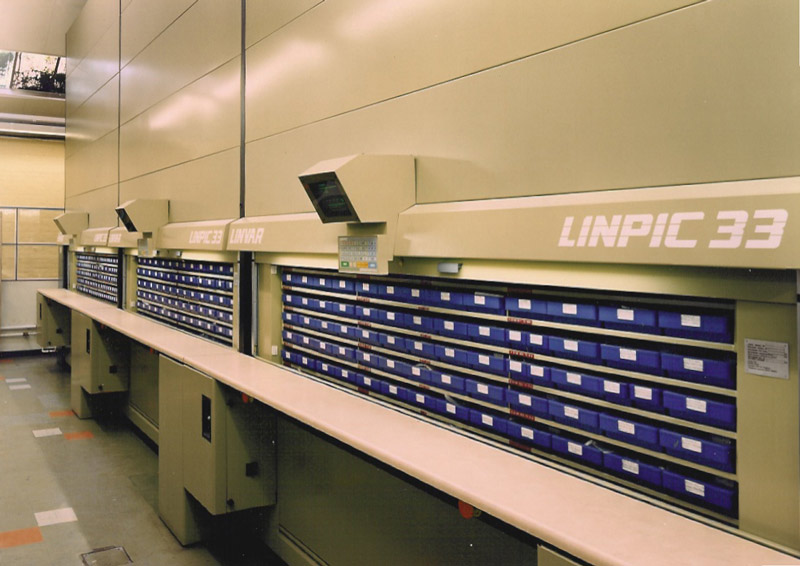
Automated storage lends itself to this kind of issue as it’s easy to label stock and retrieve the oldest each time. Systems can keep you informed of what is being held and in what quantity, plus what was drawn and when, adding to the data you hold and use to calculate safety stock levels. Best of all, if the unexpected happens, the disruption to your business should be easily manageable.