


Warehouse racking might seem like a cost-effective solution to your storage needs, and a cheap option compared to an automated storage system. And, if you’re only comparing the purchase price of one with the purchase price of the other, you’d be right. However, the initial investment does not reflect the true cost. Let’s take a look at some of the additional expense involved in using warehouse racking systems.
The cost of floorspace
The cost of production facilities is based on the size of the building in terms of floorspace. If the cost per square metre is low and the building is spacious, then a racking system isn’t necessarily a poor choice. You can keep the racks at a relatively low level and with wide aisles, so minimising the risks of working at height while facilitating access. It’ll still take longer to retrieve goods than it would from an automated storage system, but with so many other benefits that might be less of an issue.
Where it is an issue, however, is if slower retrieval of goods has a knock-on effect, meaning machines have down-time as staff walk through ranking to find and retrieve parts.
Let’s be honest, though, how many large, cheap facilities are there, with the businesses that rent them struggling to fill the space? Space is almost always at a premium, and any kind of downtime represents a cost.
Also, while rent might be charged based on a two-dimensional measurement, you have three dimensions to work with.
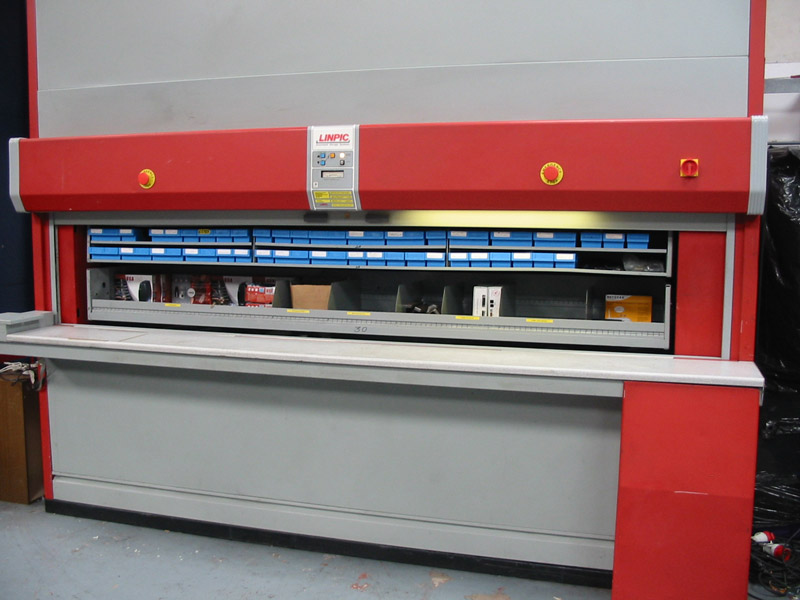
Automated storage uses the height of a workspace without risk to the workforce as, no matter how high the goods they want are situated when they go to retrieve them, they will be presented at an ergonomically safe level.
Storing large items
Large items can be difficult to accommodate using standard warehouse racking. It’s tempting to put larger items at floor level, but if they’re large but light, that means heavier items are higher up. If large items are also an odd shape, the issue is compounded, and space can be wasted by the need to accommodate them.
Automated storage systems are highly adaptable, and so handle all of this with ease.
Storing small items
Bins and trays are available to customise the shelves in an automated storage system, meaning keeping small items safe and easily accessible is a breeze. They won’t get knocked off the shelf by someone looking for something else, either.
Storing valuable items
Valuable items can be stored with everything else in an automated storage system and still be subject to restricted access – there’s no need for a separate locked room to maintain security.
Stock management and checks
Stock management is built in to automated storage systems. Conducting a stock audit couldn’t be simpler.
Health and safety
We’ve covered a lot of these issues already, but what it boils down to is this: automated storage systems are easier and safer for your people to access.
Conclusion
All in all, we’d confidently and strongly argue that when it comes to storage systems, even though your initial investment might be higher, the most cost-effective solution is an automated storage system. When you add in the additional benefits, then it wins hands down.
If you want to know more, get in touch. Our team of experts are always happy to discuss how automated storage can help.